10% SALE
Summer Edit
Heavyweight Men’s T-Shirts
Fabric weight decides whether a tee lasts a season or several years. Ours are 200gsm cotton — well above the 140–150gsm most fast-fashion tees use, so they hang straight off the shoulder instead of clinging, and they do not go see-through after a summer of washing.
One of them is garment-dyed with reactive dye, which means the finished shirt is dyed after it is sewn using a dye that bonds inside the fibre. The colour comes out slightly uneven at the seams on purpose, and it holds instead of washing out.
2 pieces in t-shirts
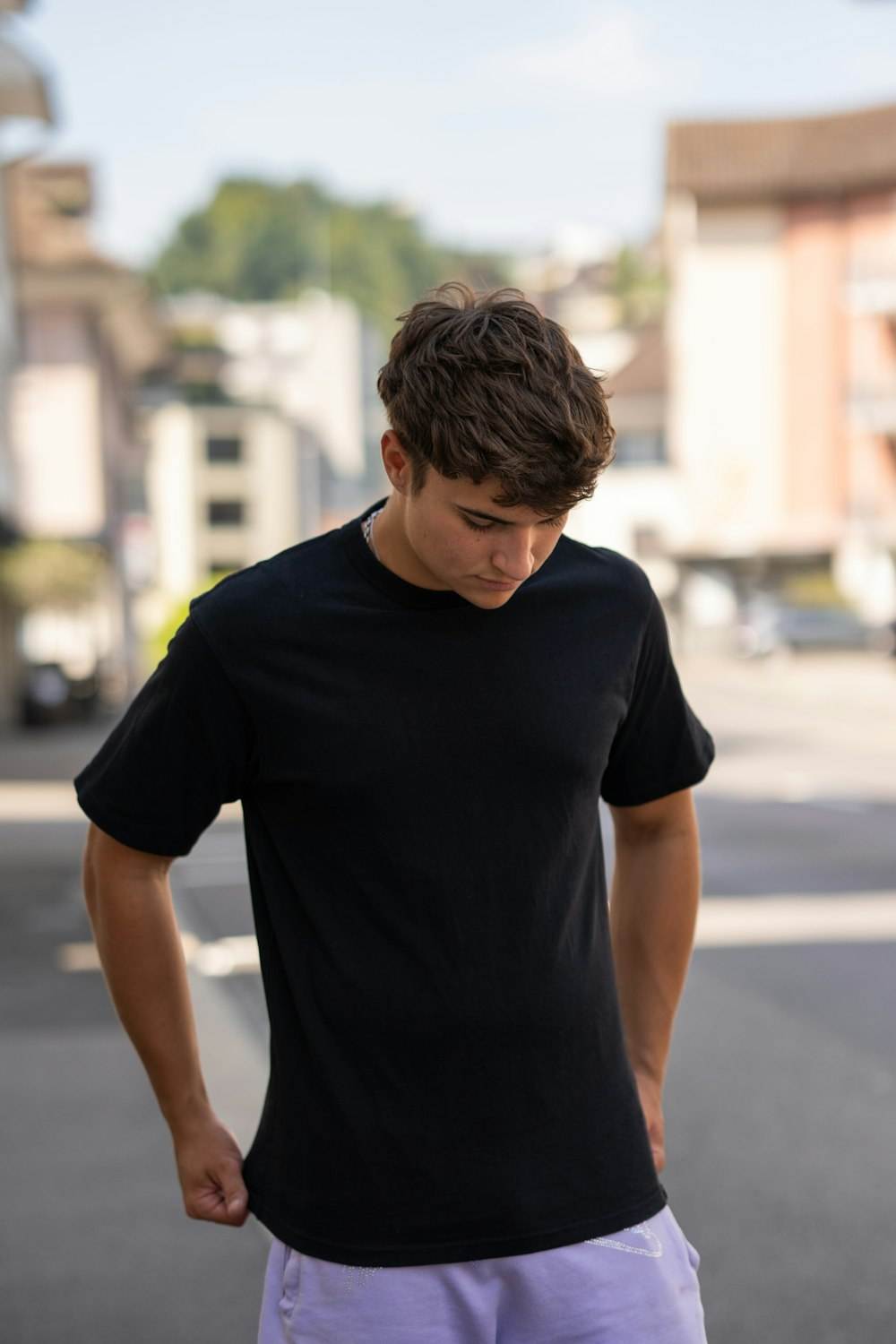

What 200gsm actually feels like
GSM means grams per square metre — how much a piece of the fabric weighs. It is the most useful number on a t-shirt and almost nobody prints it.
Rough guide: 140–150gsm is a thin promotional tee you can see your hand through. 160–180gsm is mid-weight, the range most high-street tees sit in. 200gsm is heavyweight — opaque, structured enough to hold a boxy shape without help, and heavy enough that the hem hangs straight instead of curling.
The trade-off is honest: a 200gsm tee is warmer than a thin one. In real heat you will notice. What you get back is a shirt that still looks new after two years of washing rather than one that goes thin and shapeless by the second summer.
Garment-dyed with reactive dye — and why that pairing matters
The shirt is sewn first, then dyed. Because seams are thicker and take more colour while the flat panels take less, every piece comes out slightly different and already looks broken in.
The dye itself is reactive, not pigment, and this is the part worth knowing. Pigment dye sits on the surface of the fibre — it gives you that faded look immediately and then keeps fading, noticeably, every wash. Reactive dye forms a chemical bond inside the cotton fibre, so the colour stays where it is.
Most garment-dyed tees at this price use pigment, because it is cheaper and the instant fade is easy to sell. Reactive dye in a garment-dye process costs more and takes longer. You get the uneven, lived-in character on day one without signing up for a shirt that looks washed out by spring.
How the boxy fit works
Straight through the body with a dropped shoulder, so the seam sits on your upper arm. It reads relaxed without being oversized.
If you are between sizes, go down for a cleaner line. Go up only if you specifically want the tee to sit loose over your waistband. The flat measurements on each product page are the reliable guide — measure a tee you already like and compare.
Do these t-shirts shrink?
A little on the first cold wash, mostly in length, and then they stop. Cotton always does this.
What causes real shrinkage is a hot dryer. Wash cold and air dry and the tee will stay the size you bought for as long as you own it.
Care
Cold wash, inside out, similar colours — especially for the first few washes of the garment-dyed tee, which sheds a little loose dye at the start. That is normal and it stops quickly.
Keep both out of the dryer. Heat is what fades colour and shrinks cotton; washing on its own does very little of either.