What Does Garment-Dyed Mean? A Plain-English Fabric Guide
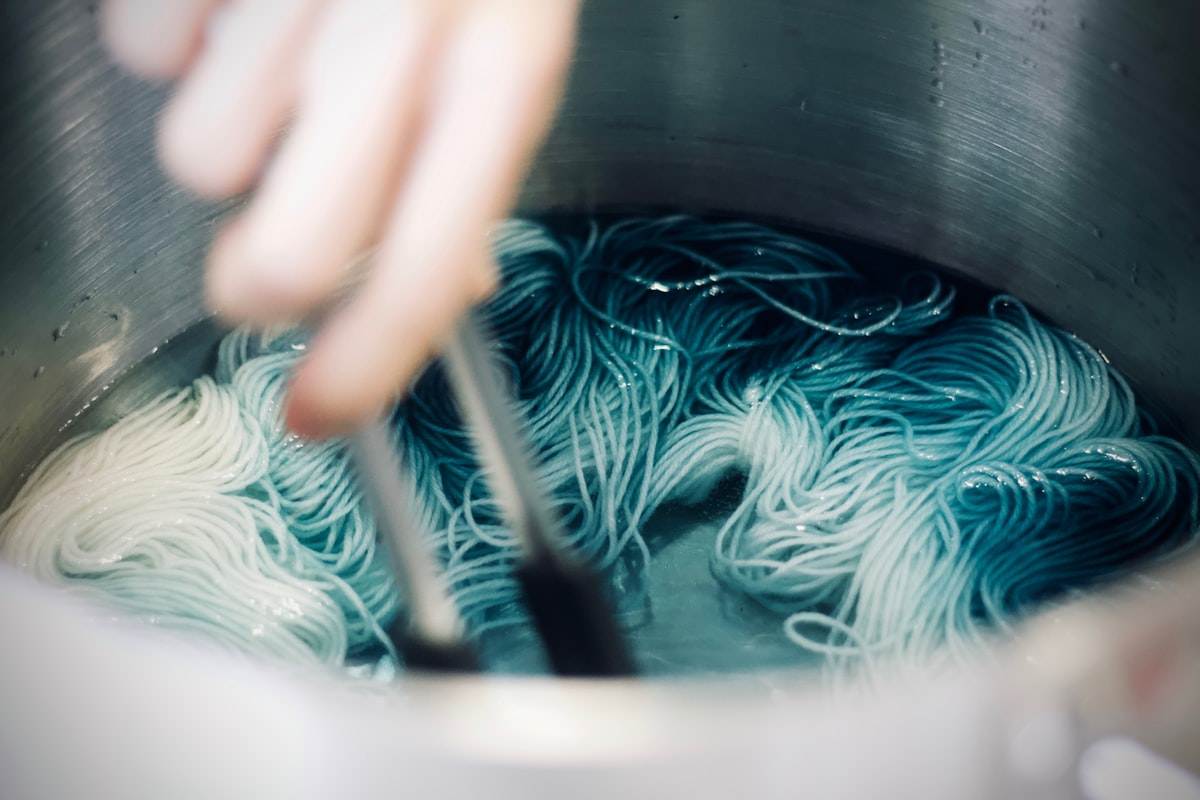
Garment dyeing means the clothes are dyed after they are sewn together, not before. That is the whole idea. Most clothing is made the other way round: the fabric is dyed on a big roll first, then cut and stitched into a shirt.
The order sounds like a small detail. It changes almost everything you notice when you hold the shirt.
Why the colour looks different
When dye hits a finished shirt, it does not soak in evenly. Seams are thicker, so they hold more dye. Collars and cuffs are stitched twice, so they come out a shade darker. The flat panels take the colour more lightly.
You end up with a shirt that already looks worn in. Not damaged, not faded in a cheap way — just softer, like it has been yours for a year. And because every piece moves through the dye bath differently, no two come out exactly the same.
Garment-dyed vs piece-dyed
Piece-dyed is the normal method. Fabric goes into the dye as a roll, comes out one flat, even colour, then gets cut into shirts. It is fast, cheap and very consistent.
Garment dyeing costs more and takes longer. The dye bath handles finished shirts, so each batch is smaller. Shirts can shrink a little during the process, which means the factory has to cut them slightly bigger to start with. More steps, more waste, more time.
What you get back is character. A piece-dyed shirt looks its best on day one. A garment-dyed shirt looks better on day three hundred.
Does garment-dyed fade?
That depends on the dye, not on the garment dyeing. This is the part almost nobody explains, and it is the difference between a tee you keep and one that looks tired by spring.
Pigment dye sits on the surface of the fibre. It gives you that faded, chalky look straight away, which is why it is popular — the shirt arrives looking vintage. It also keeps fading, visibly, every single wash. Most cheap garment-dyed tees use it.
Reactive dye forms an actual chemical bond inside the cotton fibre. The colour is part of the fabric rather than sitting on top of it, so it holds. It costs more and the process takes longer.
Our Garment-Dyed Tee is reactive dyed. You still get the uneven character at the seams from the garment-dye process, and you get to keep the colour.
What does change over time is the surface, in the places you actually use. Elbows go first. Then the front of the shoulders. It reads as age, not damage.
How to wash garment-dyed clothes
Wash cold. Hot water opens up cotton fibres and lets dye escape. Cold water keeps it where it is.
Turn it inside out, so the outside of the shirt rubs against itself instead of against your jeans and the drum of the machine.
Wash it with similar colours for the first two or three washes. A little loose dye always comes off at the start. This is normal and it stops quickly.
Skip the dryer when you can. Heat is what actually kills colour, not washing. Hang it up and it will last years longer.
Is garment-dyed better quality?
Not automatically. It is a different process, not a higher grade.
A garment-dyed shirt made from thin cotton is still a thin shirt. And as above, garment-dyed with pigment will still fade out on you. The label tells you when the dye was applied, not how good it is.
Two questions are worth asking before you buy anything described this way. What is the fabric weight? And is the dye reactive or pigment? A brand that knows the answers will publish them.
Look at the cotton weight first. Then the stitching at the shoulder and hem. Then the dye method. In that order.
How we do it
Our Garment-Dyed Tee goes into the dye bath after it is sewn, using reactive dye rather than pigment. That is the more expensive pairing, and the reason the tee arrives looking like it already belongs to you without being on a countdown to looking washed out.
The cotton is 200gsm, which is heavyweight — it keeps softening instead of thinning out. Wash it cold, keep it out of the dryer, and the colour will settle into that faded-but-not-worn-out place and stay there.