How KAIRO Sources Its Cotton: Rain-Fed Farms & Three Audited Mills
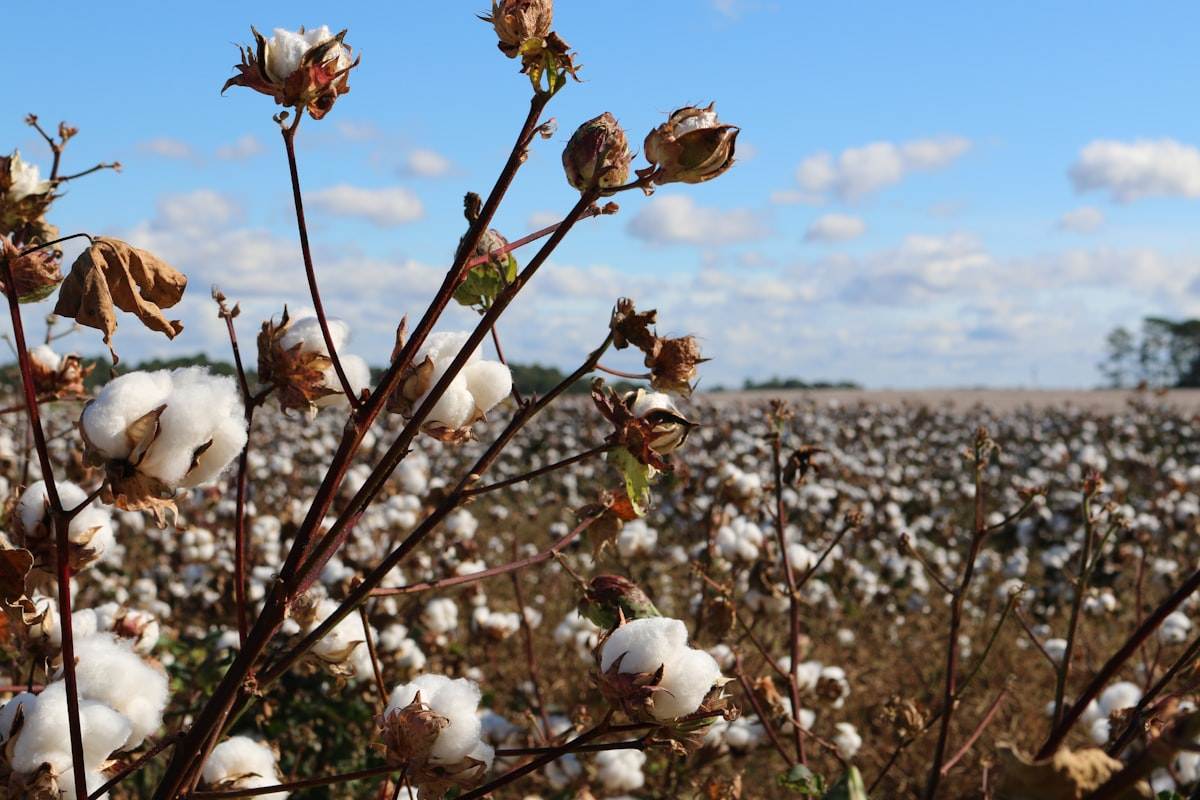
Every KAIRO cotton piece traces back to farms that grow with rainfall instead of irrigation, and to three mills we have worked with for years.
That sentence covers most of it. The detail below is for anyone who wants to know what those words actually mean.
What rain-fed cotton means
Rain-fed cotton is grown using rainfall alone. No irrigation system, no water pumped in from a river or a well.
Conventional cotton is usually irrigated, and cotton is a thirsty crop. Growing it in dry regions with pumped water is one of the more water-intensive things in clothing, and in some places it has drained the rivers it was drawn from.
Rain-fed farming avoids that. The trade-off is that yields depend on the weather, so harvests vary year to year. That variation is real and we plan around it.
Why we use three mills, not ten
It would be cheaper to take quotes from ten mills every season and use whoever is lowest. Most brands do exactly that.
We keep the list at three. All audited, all long-term.
Small lists are easier to actually check. With three mills we know the buildings, we know who runs them, and an audit means something because the same people are still there next year. With ten changing every season, nobody knows anything and the audit is paperwork.
What audited actually means
An audit is an inspection by an independent party — not by us, and not by the mill. They look at working conditions, hours, pay, safety and whether the material is what the mill says it is.
It is not a guarantee that everything is perfect. It is a check by somebody with no reason to lie about it, repeated over time.
Be careful with the word on other sites. "Audited" with no named standard and no repeat schedule does not mean much.
Why this costs more
Rain-fed cotton yields less per acre. Long-term mill partnerships mean we do not chase the lowest quote. Smaller batches cost more per unit than large ones.
All of that adds up per piece. We would rather hold the price than change the sourcing, so the cost sits with us and shows up in what you pay.
Why things sell out and stay out
This is the part people ask about most.
We do not scale faster than the supply chain can support. When a piece sells out, we wait for the next production run rather than putting in a rush order with a mill we have not worked with.
It is slower. It also means the second run is the same piece as the first, which is not true at a lot of brands.
What we are not claiming
We are not saying our cotton has no impact. Growing, spinning, dyeing and shipping cotton all use resources, and no clothing brand is neutral.
What we are saying is specific and checkable: rain-fed rather than irrigated, three mills rather than a rotating list, audited rather than assumed.
If you want detail on a particular piece, ask. We can tell you which mill it came from.